



Build Clearer Days with a Practical Mental Models Toolkit

Today we explore Mental Models Toolkit for Everyday Choices, turning abstract thinking tools into simple, friendly moves you can use before breakfast, during meetings, and when plans change. Expect stories, compact exercises, and prompts inviting your replies, so you can practice immediately, share discoveries, and steadily craft a decision style that feels confident, calm, and genuinely yours.

Start with First Principles

{{SECTION_SUBTITLE}}

Strip It to the Essentials

Write the decision at the top of a page, then list only facts you can independently verify. No opinions, no fears, no borrowed expectations. With that clean sheet, alternatives become easier to compare, brittle assumptions crack open, and the most direct route appears. Share a snapshot of your essentials list with us, and let others learn from your clarity.

Define Success Before You Start

Describe what a great outcome looks like in one or two crisp sentences, then set a deadline that respects your energy. Many readers, like Maya, discovered that defining success early prevented endless tinkering and self-doubt. Post your success definition in the comments to keep yourself honest and inspire someone facing the exact same crossroad today.

Opportunity Cost and the Hidden Price of Yes

Treat Time Like a Finite Budget

Imagine each hour as cash in an envelope. Before committing, ask which envelope loses money if you proceed. If the trade feels unfair, renegotiate or decline. Keep a weekly log of these swaps and share one surprising realization with our community. Your reflection might help another reader reclaim a precious hour that keeps getting stolen.

Ignore Sunk Costs Bravely

Past effort is a receipt, not a reason to continue. If the best option today differs from yesterday’s plan, pivot with kindness toward your earlier self. They helped you learn. Tell us about one pivot you made, what fear almost stopped you, and what freedom you felt afterward. Your example could normalize graceful course corrections for many.

Design Quick Comparison Tests

When torn between two options, run a twenty-minute taste test. Try each option briefly under real conditions, then score energy, clarity, and progress. Small trials illuminate big differences without risky commitments. Comment with your scoring categories and results; others will borrow your template, and together we will build a living library of everyday comparison experiments.

Inversion: Solve Backwards to Move Forward

Instead of asking how to succeed, ask how to fail spectacularly, then avoid those traps. Inversion exposes fragile choices and protects momentum. One subscriber listed ways to ruin a study habit—late starts, noisy rooms, zero cues—and simply removed them. Progress followed. Share your inverted checklist, and we will highlight the cleverest, friendliest prevention strategies next week.

OODA Loops for Quicker, Kinder Adjustments

Observe, Orient, Decide, Act—then loop. This cycle helps you respond to changing conditions without panic. A parent used it during a hectic school morning: noticed tension, reframed priorities, chose the simplest breakfast, and moved on. Fewer tears, more smiles. Share a moment you looped quickly, and describe one tweak you’ll try next time under similar pressure.

Observe Without Judgment First

Name what you see like a camera: traffic is heavy, inbox is full, energy is medium. Avoid stories for sixty seconds. Neutral noticing shrinks reactivity and widens options. Comment with your go-to observation cues and how they changed one rushed scenario today, especially when expectations collided with reality and kindness still felt possible.

Orient Beyond Your Biases

Ask which models apply—bottlenecks, Pareto, or base rates—and which assumptions could be wrong. Consider other perspectives, especially those of people affected by your decision. Then pick a direction. Tell us one bias you spotted recently and how reframing shifted your next step, even if the situation seemed stubborn and your patience felt thin.

Decide and Act in Reversible Steps

Prefer small, reversible moves when uncertainty is high: send a draft, test a schedule, try a new route. Gather feedback and loop again. Momentum matters more than bravado. Share a reversible step you took this week and what signal you watched to determine whether to continue, pause, or gracefully change course without drama.

Expected Value for Everyday Bets

Not every choice pays in dollars; some pay in energy, learning, or reputation. Estimate possible outcomes, multiply by their likelihood, and compare. A reader accepted a small speaking gig for learning value, and later it opened a favorite opportunity. Share a tiny bet you’ll place this week and the upside you hope quietly compounds.

Feel the Numbers Without Fancy Math

Sketch three outcomes—bad, okay, great—then guess their chances. If the great upside is meaningful and the downside is tolerable, take the bet. Keep stakes low at first. Post your sketch and reflections, so others can cheer your courage and borrow your lightweight process for evaluating uncertain paths without freezing in analysis.

Seek Asymmetric Upsides

Favor choices where small effort or risk can lead to outsized benefits: a concise email to a mentor, a prototype shared early, or a trial routine. These bets respect limited resources. Tell us one asymmetric opportunity you spotted today and the minimal step you will take before bed to nudge it forward meaningfully.

Protect the Downside Thoughtfully

Set safety rails: time caps, budget limits, or exit criteria. Decide in advance what signal means stop or pivot. This preserves confidence while you explore. Comment with one safety rail you will add to an experiment, and report back on how it changed your willingness to try bolder, kinder moves this month.

Trace the Ripples Before You Commit

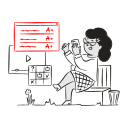
For any appealing option, list first-order effects, then second-order ones. Will this choice crowd your calendar, dull your focus, or improve relationships later? If the downstream looks messy, redesign. Post a ripple sketch in the comments, and expect helpful feedback that reveals blind spots you might miss when enthusiasm runs high.

Compound Small Habits, Not Stress

Choose tiny actions that stack gracefully: two-minute resets, tidy thresholds, or friction-free cues. When paired, they form supportive scaffolding rather than brittle rules. Tell us which pair you will compound this week, how you will track consistency, and what tiny celebration you will use to anchor the behavior without self-criticism.

Calendar as a Garden, Not a Cage

Plant commitments with breathing room, prune when growth crowds light, and leave pathways for spontaneity. Review weekly with curiosity, not blame. Share a screenshot of a small pruning you made and describe the relief it created later. Others will borrow your arrangement ideas and adapt them tenderly to their unique constraints.

Tavoveltozeramexo
Privacy Overview

This website uses cookies so that we can provide you with the best user experience possible. Cookie information is stored in your browser and performs functions such as recognising you when you return to our website and helping our team to understand which sections of the website you find most interesting and useful.